

Morning
Morning Kindergarten Program
Rhythm, sensory experience, movement, language and the security of loving repetition — gently widening into imagination, collaboration and independence.
A warm, unhurried place where children are held with reverence and given the freedom to grow through play, rhythm and nature.
Open-ended play · emotional safety · language-rich environments · nature-rooted rhythms.
Sketch is a gentle, happy place that feels a little like a grandmother's home — calm, warm and full of quiet love. The early years are not a race toward academics. They are a time to build foundations: in the body, the senses, language, imagination, confidence and belonging.
What shapes learning
The senses are a child's first doorway to learning. Movement and real engagement with the world build the foundations for everything to come.
Every child is met with respect for who they are — their pace, temperament, questions and unfolding. We hold without grasping.
Nature, rhythm, open-ended materials and real-life experiences are not additions to the day. They are the day itself.
In uninterrupted play, children think, create, collaborate and make sense of the world. This is not time away from learning — this is learning.
A day at Sketch
Arrival & free play
A warm, unhurried welcome. Children settle into the room and begin their day with self-chosen play.
Circle time
Songs, verses, finger plays and seasonal rhymes — gathering together in shared rhythm.
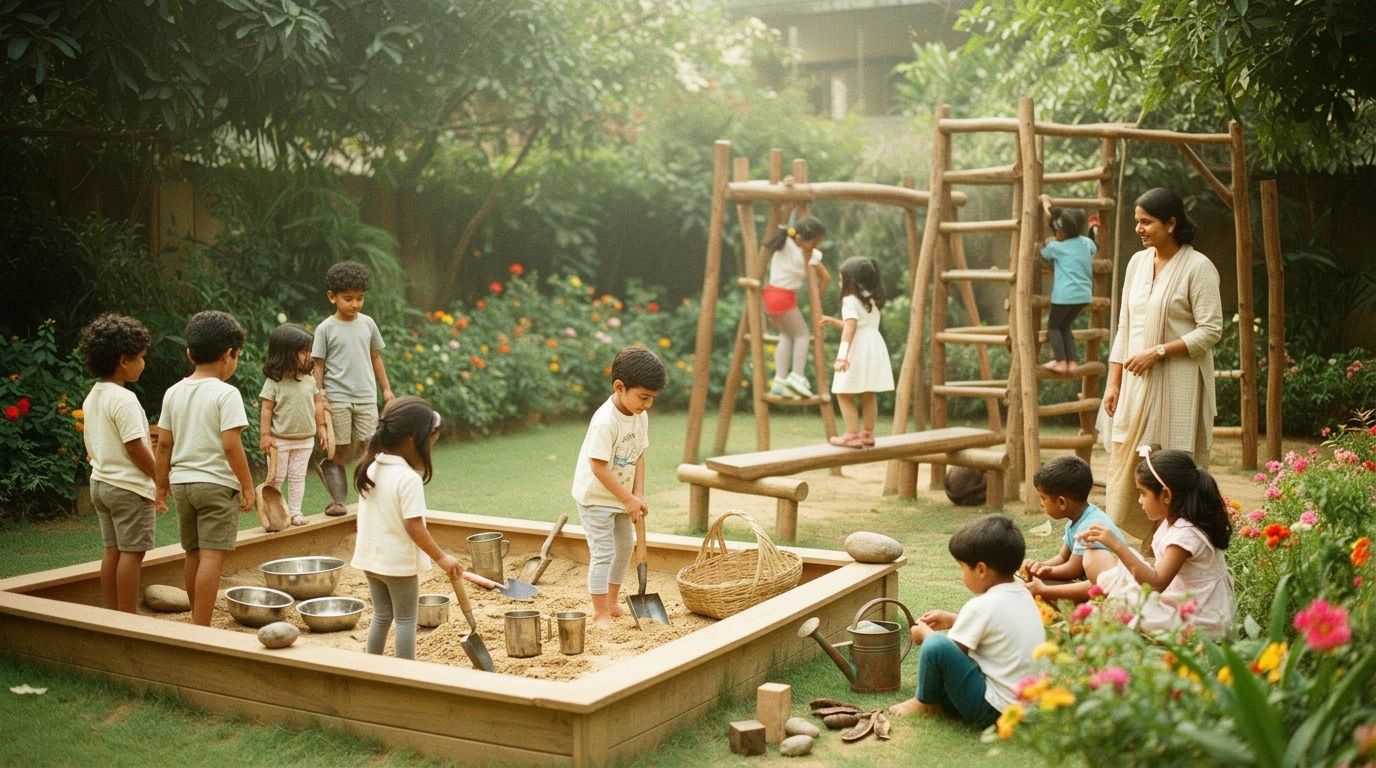
Outdoor play
Free movement in the garden — climbing, digging, running, watching, gathering.
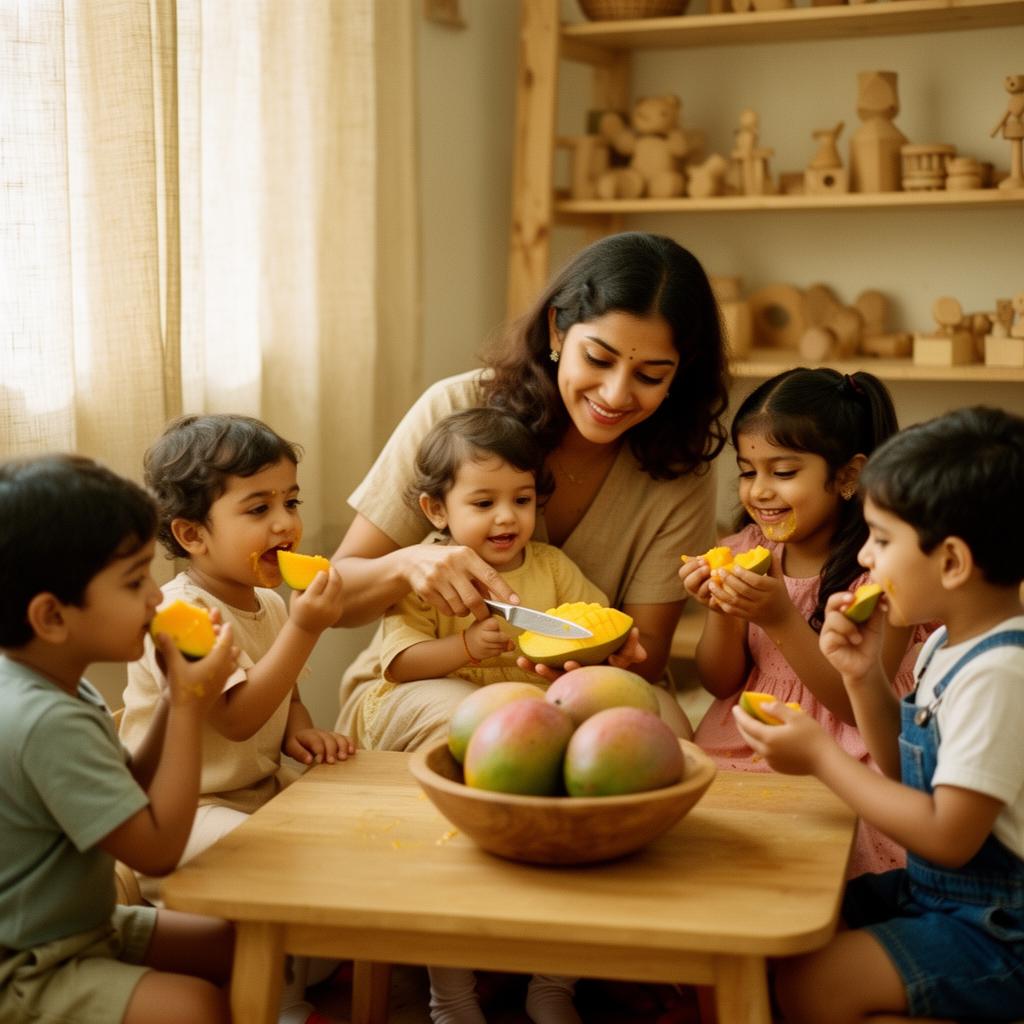
Fruit time
A shared snack of seasonal fruit.
Free play indoors
Imaginative play with open-ended natural materials — cloths, wood, baskets, dolls.
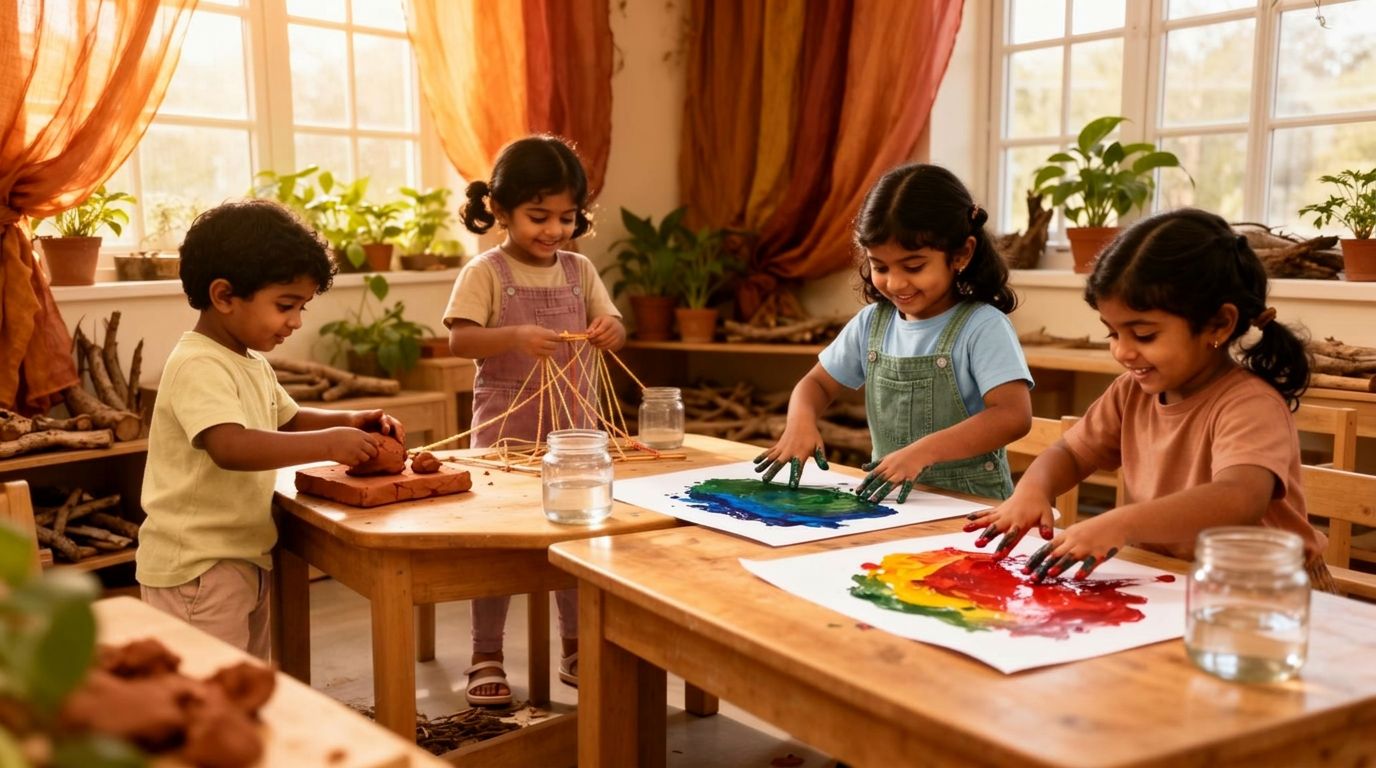
Artistic activity
Watercolour painting, beeswax modelling, drawing or seasonal handwork — guided by the week's rhythm.
Meal time
A shared, wholesome vegetarian lunch — set with care, eaten together.
Story time
A told story or puppet play, drawn from folk and nature tales.
Rest & goodbye
Quiet rest for the youngest. Slower transitions and gentle goodbyes. Extended care continues until 6 pm.
The day breathes
The emphasis is on rhythm over rush, presence over performance, and depth over variety.
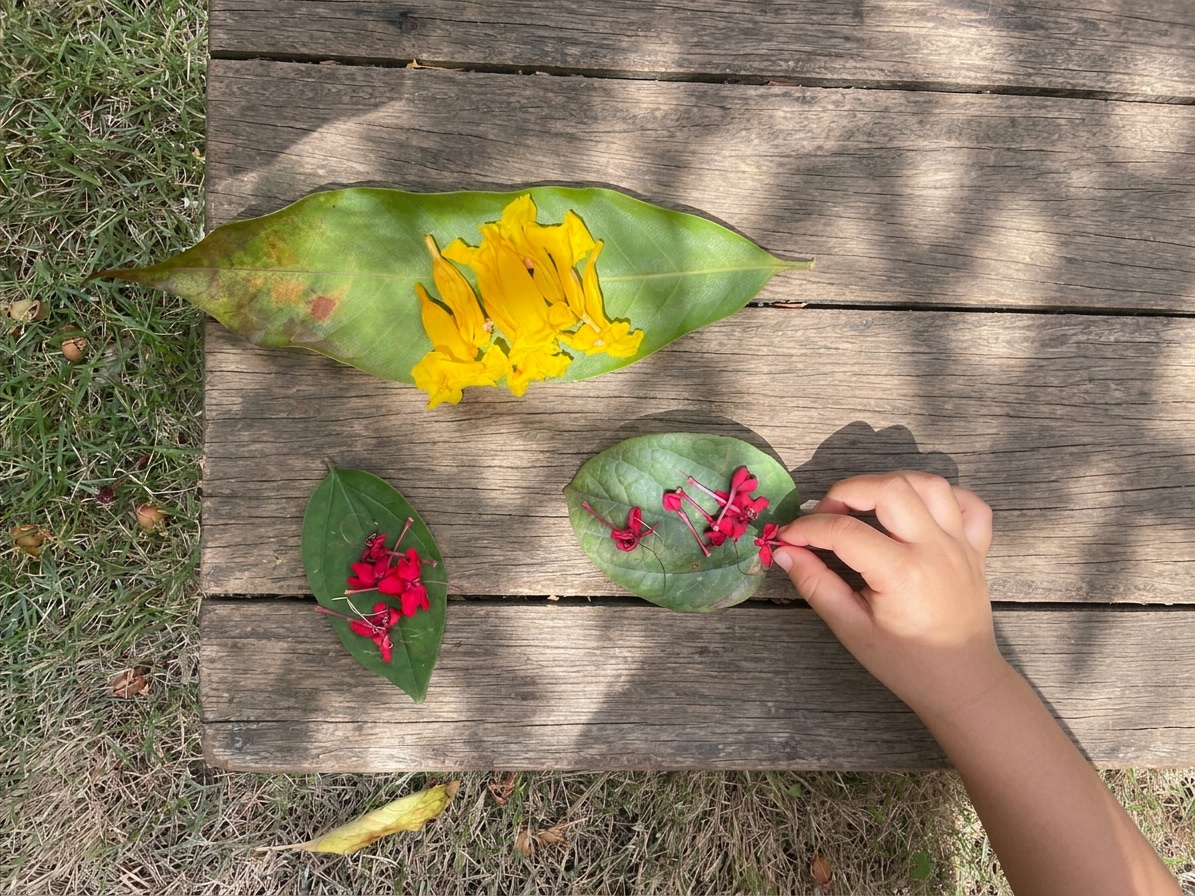
“Play is the work of childhood.”
— Jean Piaget
About Sketch
Sketch was founded by parents and educators who wanted a different beginning for their children — one rooted in warmth, wonder, and quiet trust in how childhood naturally unfolds.
We are a small, intentionally unhurried kindergarten and daycare for children between two and six years of age, reimagining the preschool landscape in India by shifting the focus from early performance to strong developmental foundations.
In a market where worksheets and the rush toward academics begin far too early, we focus instead on open-ended play, emotional safety, language-rich environments, and nature-rooted rhythms.
Our philosophy is deeply informed by developmental science and research on early childhood learning. Neuroscience consistently shows that the first seven years are foundational for emotional regulation, language development, social connection, creativity, executive functioning, and lifelong learning. Children learn best not through pressure and performance, but through relationships, movement, play, repetition, sensory exploration, and meaningful real-world experiences.
Our spaces are thoughtfully designed with natural materials and open-ended experiences that invite curiosity, imagination, and deep engagement. Our adults are attentive, trained, and deeply present — holding each child with care, respect, and reverence.
We believe that the early years are not a race to achieve more, but a foundation for becoming. A child who is met with trust, safety, and belonging in their earliest years carries that quiet confidence into everything that follows.
At Sketch, childhood is not hurried.
It is protected, nurtured, and deeply valued.
Our mission
Our mission is to make high-quality early education accessible — proving that affordability and deep respect for childhood can coexist without compromising pedagogy, care, or scale.
We hope to build learning spaces that feel deeply human: places where children are free to explore, adults slow down enough to truly see them, and childhood is treated not as preparation for life, but as a meaningful stage of life in itself.
Kanika is a UX researcher and design strategist with over 15 years of experience designing human-centered digital products, services, and systems.
As a young parent, she began turning her design thinking lens toward a more personal question: How do children truly learn and develop in the first seven years of life?
What began as a deeply personal exploration soon evolved into Sketch — a child-led early learning model reimagining preschool education in India by shifting the focus away from early performance and toward strong developmental foundations through open-ended play, emotional safety, language-rich environments, and nature-rooted rhythms.
Her work brings together principles from design research, developmental psychology, systems thinking, neuroscience, and conscious education to create learning environments that feel calm, connected, and deeply aligned with the real developmental needs of children.
What’s in the name?
The name Sketch carries two deeply personal meanings.
The first comes from the idea that everything we see around us — a chair, a building, a book, even the phone in your hand — once began as a sketch. Every meaningful creation first existed as an idea, a possibility, a quiet beginning before it took shape in the world.
In many ways, childhood is that sketch. The early years are where imagination, identity, confidence, and ways of seeing the world begin to form.
The second meaning is a tribute to Kanika’s grandmother, Smt. Shakuntala Kohli, whose warmth and presence deeply shaped her life and understanding of care.
SKETCH also stands for: Shakuntala Kohli’s Exploratory and Thriving Children’s House.
The vision for Sketch has always been to feel less like an institution and more like a gentle, loving home — calm, nurturing, unhurried, and full of quiet belonging, much like a grandmother’s home.
“What a child becomes tomorrow begins with how they are held today.”
A mixed-age kindergarten
At Sketch, children between two and six years learn and grow together in a shared environment. Younger children learn through observation and imitation; older children develop empathy, confidence and care through guiding the younger ones — a more organic social environment that mirrors real life.
Morning
Rhythm, sensory experience, movement, language and the security of loving repetition — gently widening into imagination, collaboration and independence.
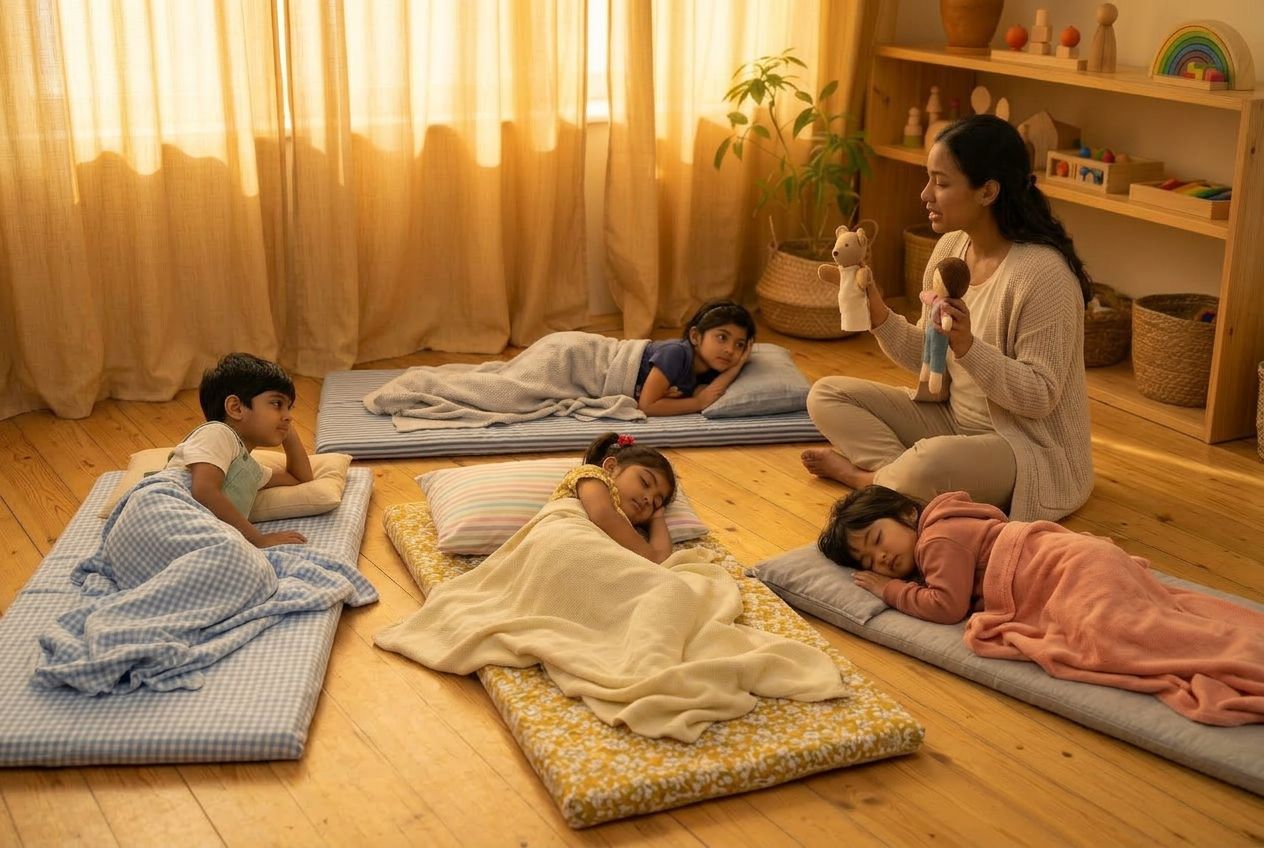
Extended care
A calm, nurturing extension of the day — familiar rhythms, mixed-age interactions, free play, stories, rest and quiet belonging.
“The early years are for roots, not results.”
Gentle answers
From the journal
Quiet reflections on childhood, rhythm and parenting — published on Substack and gathered here as they arrive.
Gathering the latest notes…
Come visit the space, meet the adults, and feel the rhythm of a morning. Admissions are open for ages 2–6.